The Problem With Perfect
And How To Claw Your Way Out From Underneath The Weight Of It All

Before.
I didn’t realize I was a perfectionist while I was in it. I didn’t know that the crushing weight of exceeding expectations was my driving force until after it all fell apart.


I started keeping a planner in middle school. My first foray into knowing when and how everything was going to happen started with writing down every assignment in different color pens and crossing completed tasks off the list with a red marker.
Done felt right. Done was good. Done meant I was in control and I had made a good plan that I stuck to and was disciplined enough to finish with time to spare.
Even now it’s hard to reconcile the word perfectionist with who I was in high school. My room was a mess, I spoke a mile a minute, and I never once pulled an all nighter to stay up studying.
I knew I wasn’t the smartest. I knew I wasn’t the thinnest. Those were things I believed I couldn’t change. What I was, was the most hard working. I would plan out how and when to study for an exam starting weeks before. I made color coded lists and note cards and re-wrote entire chapters so the material would “stick better.” I memorized formulas until I could repeat them forwards and backwards. If there was some aspect of school I could control, I did. I didn’t know that I was learning to equate progress, production, efficiency, and perfection with worth. But I was.
In college I called my mom a blubbering mess after earning a C in an Intro to Sociology Course. Anthropology was harder so I had spent all my time memorizing the different bone structures of obscure primates. How on earth had I let the ball drop so far that I had missed enough questions on a Sociology exam to earn a C? My saint of a mother could not understand for the life of her why I would care about a C. She had always been in the camp of “Just do what you can and leave the rest to God.”
But unfortunately for me the take away was not: “You’ll get ‘em next time.”
The lesson instead was: “You didn’t work hard enough.”
Those were the same words I repeated to myself nightly when I couldn’t single handedly fix what I didn’t even know was broken. I began to keep a personal tally of how I was being “graded.”
“You can’t keep the house tidy enough.”
“You don’t give him enough attention.”
“Balls are dropping. You can’t juggle a career and being a mom and a wife well enough.”
Ultimately — “You didn’t work hard enough.”
When I was in graduate school a professor started her course by asking us to look around the room at the 7 other women sitting around the table. She likely has no idea that her words still echo in my head all of the time. She said, “Every single one of you is used to being the best. That won’t be possible here. We intentionally make it impossible to work hard enough to do it all. Here you will learn the meaning of good enough.”
After.
Ironically, the focus of my doctoral program was Cognitive Behavioral Therapy (CBT). CBT posits that all thoughts, feelings, and behaviors are connected and equally influence each other. While I was drawing the CBT triangle for my a patient 3x my age, I was starting to recognize my cognitive distortions: all or nothing thinking, labeling, catastrophizing.
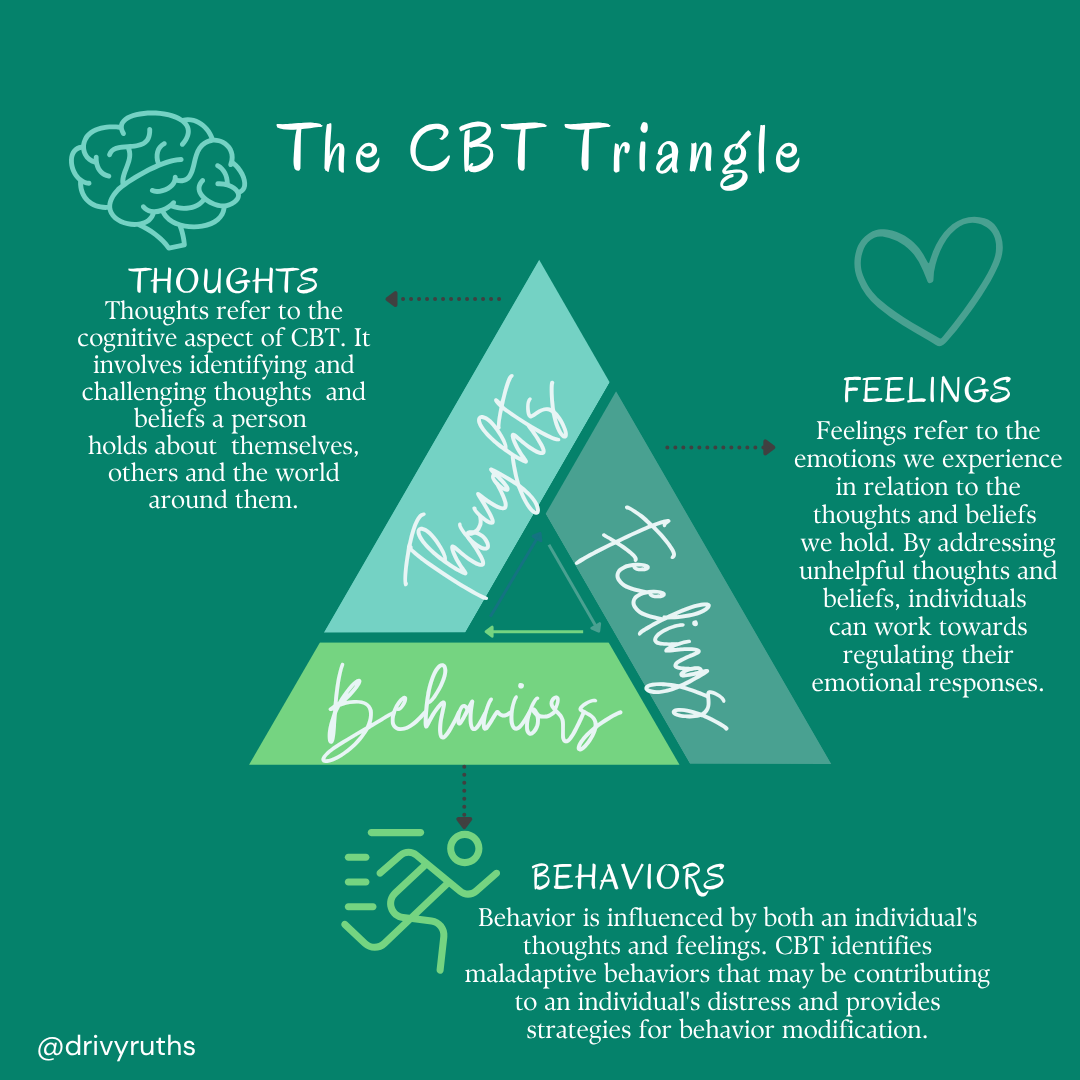
I was beginning to question whether or not it was true that I was “lazy” or a “bad wife.” I started to wonder whether these experiences really were “the worst thing that could ever happen to me” or if this dynamic shift could be a blessed, predestined opportunity. I responded to “You should…” with “Says who?”
The seed that was planted the day my professor welcomed us to her course began to sprout. As self-doubt and the effects of constant negative thoughts tried to take root over my life, I heard:
“You’ve done all you could.”
“You exhausted every possible option.”
“You’ve tried for long enough.”
I stopped grasping for the most negative idea that would allow me some semblance of control: “This is your fault because of ______” (fill in the blank with the day’s shortcomings).
Instead I leaned into: “You are enough | This is out of your hands | There is a divine plan.”
I stopped looking around the table and comparing myself to all of the other incredible women in the world, stopped trying to measure up, be efficient, right, or productive all of the time.

I stopped trying to fix what was not broken.
And the world became bearable again.